← กลับไปหน้าเรื่องน่ารู้← Back to Wellness Tips
Office Syndromeออฟฟิศซินโดรม: 5 สัญญาณเตือนที่ไม่ควรมองข้าม และการนวดช่วยได้อย่างไร Office Syndrome: 5 Warning Signs You Shouldn't Ignore — and How Massage Helps
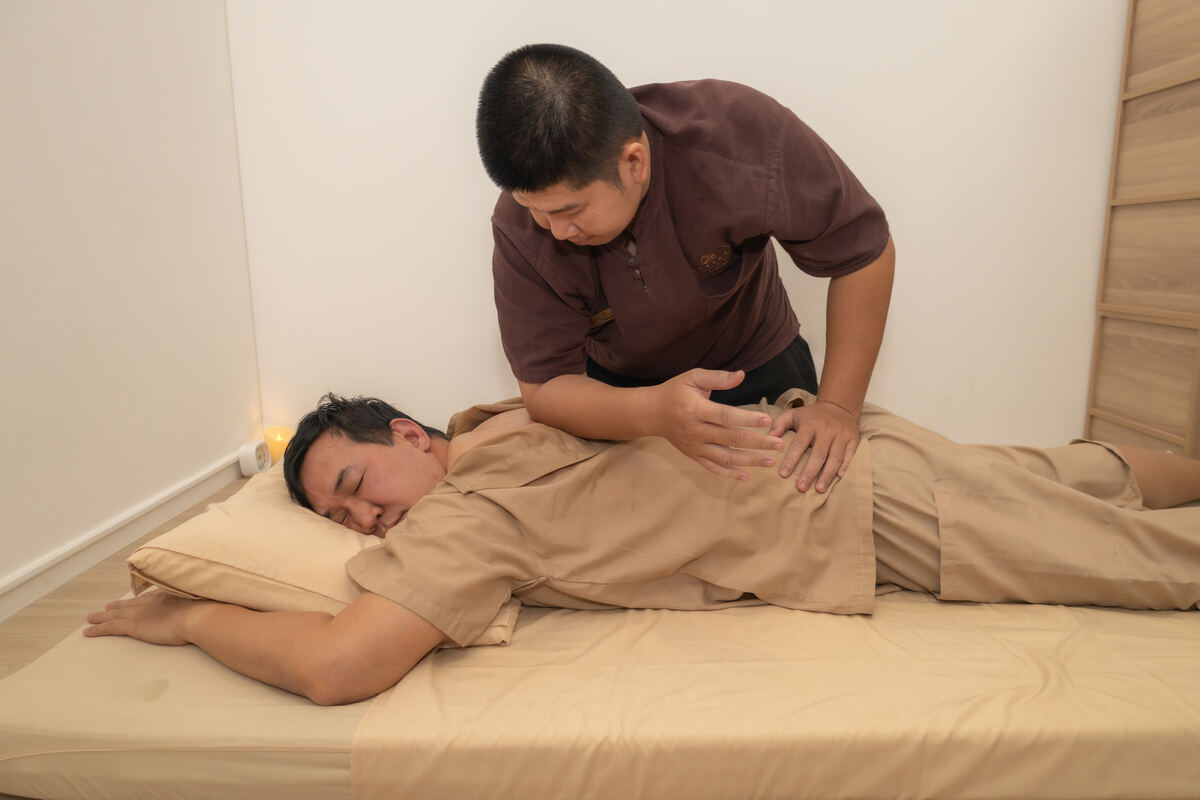
ถ้าคุณนั่งหน้าจอวันละ 8 ชั่วโมงขึ้นไป แล้วรู้สึกว่า "เมื่อยเป็นเพื่อนสนิท" ไปแล้ว — บทความนี้เขียนเพื่อคุณโดยเฉพาะ ลูกค้าส่วนใหญ่ของเราในย่านอ่อนนุชและ Habito Mall ก็เป็นชาวออฟฟิศและคนทำงานจากคอนโดเหมือนกัน อาการที่เจอบ่อยที่สุดคือสิ่งที่เรียกกันว่า ออฟฟิศซินโดรม (Office Syndrome)
ออฟฟิศซินโดรมคืออะไร?
ออฟฟิศซินโดรมไม่ใช่โรคเดียว แต่เป็นกลุ่มอาการของกล้ามเนื้อและเยื่อพังผืดที่ตึงตัวสะสม จากการอยู่ในท่าเดิมนานๆ โดยเฉพาะท่านั่งก้มคอ ไหล่ห่อ หลังงอ กล้ามเนื้อบางมัดทำงานหนักตลอดเวลาโดยที่เราไม่รู้ตัว พอสะสมนานเข้าก็กลายเป็นจุดตึง (trigger point) ที่กดแล้วร้าวไปที่อื่นได้
5 สัญญาณเตือนที่พบบ่อย
- ปวดคอ บ่า ไหล่ เรื้อรัง — เมื่อยตื้อๆ ช่วงบ่ายถึงเย็นแทบทุกวัน โดยเฉพาะฝั่งที่ใช้เมาส์
- ปวดหัวท้ายทอย — ตึงจากต้นคอลามขึ้นศีรษะ บางครั้งร้าวมาถึงขมับ มักเป็นช่วงบ่ายแก่ๆ
- สะบักตึงหรือชาช่วงแขน — รู้สึกหนักๆ ล้าๆ บริเวณสะบัก บางคนมีอาการชาแขนหรือนิ้วมือเป็นครั้งคราว
- หลังส่วนล่างตึง — ลุกจากเก้าอี้แล้วต้องค่อยๆ ยืดตัว เพราะหลังล่าง "ค้าง"
- ไหล่ห่อ คอยื่น — ส่องกระจกแล้วเห็นว่าศีรษะยื่นไปข้างหน้ากว่าปกติ นี่คือท่าที่ทำให้กล้ามเนื้อคอรับน้ำหนักมากกว่าที่ควรหลายเท่า
ดูแลตัวเองระหว่างวันได้อย่างไร?
- ปรับจอให้อยู่ระดับสายตา — ขอบบนของจอควรอยู่ระดับเดียวกับคิ้ว จะได้ไม่ต้องก้มคอทั้งวัน
- ท่ายืดคอ — เอียงหูซ้ายเข้าหาไหล่ซ้ายค้าง 15 วินาที สลับข้าง ทำเบาๆ ไม่ต้องกดหัว
- ท่ายืดอก — ประสานมือไว้ข้างหลัง ยืดแขนแล้วเปิดอก ค้าง 15 วินาที ช่วยคลายไหล่ห่อ
- ดื่มน้ำให้พอ — กล้ามเนื้อที่ขาดน้ำจะตึงและล้าง่ายขึ้น
แล้วการนวดช่วยอะไรได้บ้าง?
การยืดเองระหว่างวันช่วยได้ระดับหนึ่ง แต่จุดตึงลึกๆ ที่สะสมมานาน มักต้องอาศัยมือของนักบำบัดที่รู้ว่าจุดไหนคือต้นเหตุ การนวดออฟฟิศซินโดรมที่ Relax Hub ต่างจากนวดไทยทั่วไปตรงที่:
- เจาะจงจุดที่ตึงจากการทำงาน — คอ บ่า สะบัก และหลังส่วนล่าง ไม่ใช่นวดกระจายทั้งตัว
- ใช้เทคนิคกดจุดร่วมกับการยืดเหยียด — คลายกล้ามเนื้อมัดลึกที่มือเราเอื้อมไม่ถึง
- ปรับน้ำหนักตามอาการจริง — นักบำบัดจะถามและเช็คจุดตึงก่อนเริ่มเสมอ
ลูกค้าหลายคนบอกเราว่าหลังนวด รู้สึกคอเบาขึ้น หันได้สุดขึ้น และหลับสบายขึ้นในคืนนั้น — ซึ่งเป็นสิ่งที่การนั่งพักเฉยๆ ให้ไม่ได้
If you spend eight or more hours a day at a screen and soreness has become your closest colleague, this one's for you. Most of our guests around On Nut and Habito Mall are office workers and condo-based professionals — and the pattern we see most often is what's known as office syndrome.
What is office syndrome?
Office syndrome isn't a single illness — it's a cluster of muscle and fascia tension that builds up from holding the same posture for hours: head tilted down, shoulders rounded, back slouched. Certain muscles quietly overwork all day, and over time they develop trigger points — tight knots that can refer aching to other areas.
5 common warning signs
- Persistent neck and shoulder ache — that dull afternoon heaviness, especially on your mouse-hand side.
- Headaches from the base of the skull — tension creeping from the neck up to the temples, usually late in the day.
- Tight shoulder blades or occasional arm tingling — a heavy, fatigued feeling between the shoulder blades.
- Stiff lower back — needing a moment to "unfold" when you stand up from your chair.
- Rounded shoulders, forward head — if your head sits ahead of your shoulders in the mirror, your neck muscles are carrying far more load than they should.
Caring for yourself during the day
- Raise your screen — the top edge should sit at eyebrow level, so your neck isn't bent all day.
- Neck stretch — gently tilt your left ear toward your left shoulder, hold 15 seconds, switch sides. No pulling.
- Chest opener — clasp your hands behind your back, straighten your arms and lift your chest for 15 seconds.
- Stay hydrated — dehydrated muscles tire and tighten faster.
Where massage comes in
Stretching helps at the surface, but long-accumulated deep tension usually needs a therapist's hands — someone who knows which knot is the real culprit. Office syndrome massage at Relax Hub differs from a general Thai massage in a few ways:
- It targets work-related tension zones — neck, shoulders, shoulder blades and lower back, rather than the whole body evenly.
- It combines pressure-point work with stretching — reaching deep muscle layers you can't self-massage.
- Pressure is adjusted to your actual condition — our therapists check your tension points before starting, every time.
Guests often tell us their neck feels lighter, turns further, and they sleep noticeably better that night — something a rest on the sofa alone rarely delivers.
คอร์สที่เหมาะกับอาการนี้Courses made for this
Office Syndrome 60–120 นาที (1,200–2,200.-) หรือจบครบในครั้งเดียวกับ Office Escape 90 — คอ บ่า ไหล่ + หลัง + เท้า (1,350.-) ที่ชั้น 3 Habito Mall Office Syndrome, 60–120 mins (1,200–2,200 THB) — or all-in-one relief with Office Escape 90: neck, shoulders, back & feet (1,350 THB), 3rd floor Habito Mall.
จองผ่าน LINE @THERELAXHUBBook via LINE @THERELAXHUB โทร 063-452-9878Call 063-452-9878